VISITOR GUIDE · 2026-10-19
Sports Injury Care in Korea: From First Assessment to Return Planning
A hiking, skiing, running or gym injury can change the purpose of a visit to Korea. The useful first question is what needs assessment now, followed by what a safe continuation of the trip and later training would involve.
In this guide
- Acute injury and repetitive overload are different histories
- The roles of assessment, imaging and rehabilitation
- Protection and repair are not the whole recovery
- Reconstruct the event or training change
- Choose assessment before a return-to-sport package
- Costs depend on the stage of care
- Make rehabilitation goals specific
- Make the sporting goal visible in the handover
- Leave with an onward-care handover
Acute injury and repetitive overload are different histories
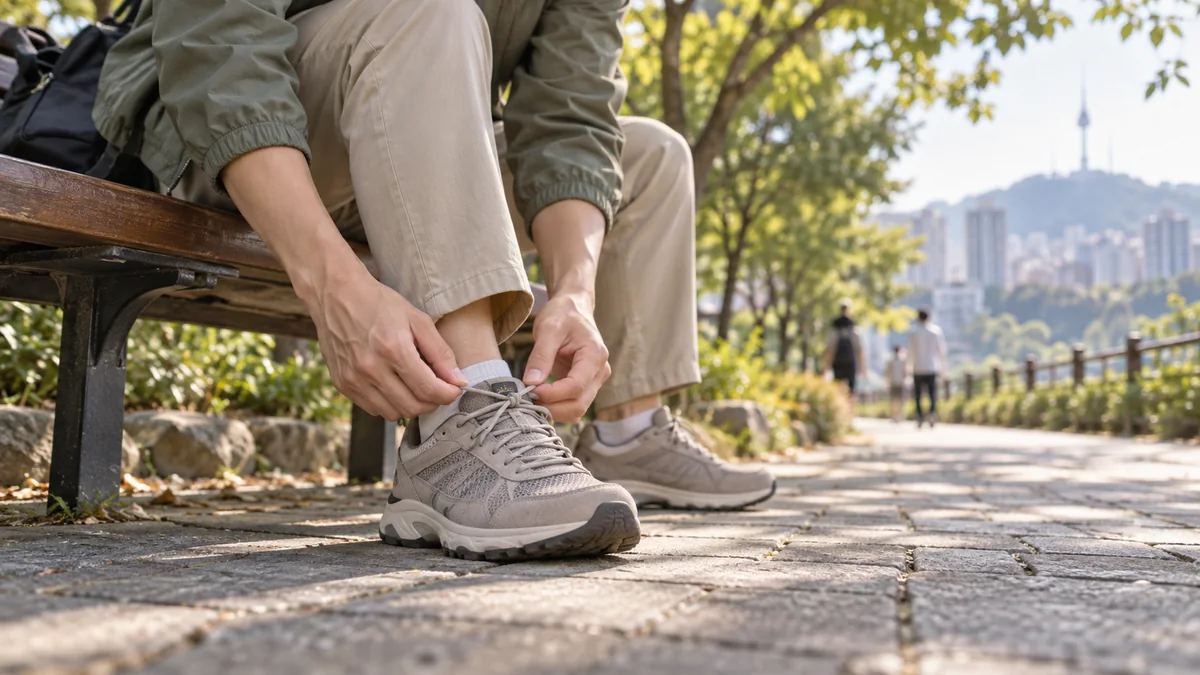
A collision or awkward landing creates a recognizable event; an overuse problem may emerge as training accumulates. NIAMS distinguishes these patterns because they frame different questions about the tissues involved and the demands placed on them. Sports injury is not reserved for competitive athletes: similar problems can arise from repeated occupational or recreational movements.
A label such as tennis elbow should not be assigned simply because a person plays tennis. An account of activity and symptoms is needed to determine what was injured and whether an apparently minor problem needs further assessment.
The roles of assessment, imaging and rehabilitation
Medical assessment may involve a general clinician, an orthopaedic or sports-medicine service, or rehabilitation medicine depending on the problem. An examiner considers the injured area, mechanism and functional loss; imaging is used when indicated to clarify bone or soft-tissue questions. Rehabilitation is a further stage, not an alternative name for every diagnostic appointment.
Some injuries need protection or immobilization, while others require a different approach. Selecting a massage or exercise package before that distinction has been made can leave an important assessment question unanswered. Serious injuries require prompt medical evaluation rather than a return-to-training appointment.
Protection and repair are not the whole recovery
NIAMS notes that most musculoskeletal sports injuries do not need surgery, although some fractures or torn tissues do. A brace or cast may protect an injury for a defined period; the reason for it and the plan for review matter.
Rehabilitation then addresses movement and strength before return to the activity that caused the problem. Pain relief during a session is not equivalent to being ready for cutting, jumping or contact sport. A return plan should identify the demands being resumed and how readiness will be evaluated, without promising a universal timetable for different injuries.
Reconstruct the event or training change
For a sudden injury, record the movement, surface, equipment and point at which symptoms began. If the issue built up over time, describe recent changes in distance, intensity, shoes or training frequency. NIAMS distinguishes sudden injuries from those related to repetitive loading, but neither category establishes the specific diagnosis. Note earlier injuries to the same area and any restrictions already given by a professional. A coach's observation can be useful background; it should be clearly separated from a medical conclusion.
Choose assessment before a return-to-sport package
When contacting a provider, specify the body part, current functional limitation and whether you can use it normally. Ask whether the appointment is an initial medical assessment, a rehabilitation assessment or an intervention already requested by another clinician. These are different services.
If you have not been examined, avoid booking a treatment series on the assumption that the problem is a minor strain. Severe pain, inability to bear weight, an unusually immobile joint or an obviously displaced bone or joint should be assessed promptly rather than waiting for a planned sports appointment.
Browse Seoul clinics on KoreaClinicGo → · Browse Busan clinics on KoreaClinicGo →
Costs depend on the stage of care
An initial injury consultation, an imaging appointment and a rehabilitation assessment are distinct services. The estimate should show whether a brace, cast, crutches or fitting instruction is included. A proposed operation needs its own explanation of admission, anaesthesia, follow-up and rehabilitation charges.
For a therapy course, identify the session length, reassessment points and cancellation arrangements if the injury needs a different pathway. Sporting event or travel insurance may require particular evidence of the incident and medical necessity, so the correct paperwork should be established before optional treatment costs are incurred.
Make rehabilitation goals specific
Explain the difference between what you need for the next few days and what you hope to do later. Walking around a city, carrying a child, completing a race and returning to contact sport are separate goals. Ask how readiness will be evaluated, what milestones matter and who should supervise progression after you go home. NIAMS describes rehabilitation before returning to the activity that caused an injury; the appropriate programme must be individualized. A fixed number of visitor sessions is an administrative package, not an automatic clearance for sport.
Make the sporting goal visible in the handover
A person returning to a desk job and a person returning to a mountain race may need different next-stage decisions after the same early assessment. The handover should name the desired activity and describe current limitations rather than simply say sports treatment completed.
If a coach or therapist will continue the programme, agree how clinical restrictions will be communicated without unnecessary disclosure of unrelated health information. A short visit can establish a diagnosis or referral question, but ongoing testing of function may need to happen elsewhere. Booking several sessions should not create pressure to resume sport before reassessment.
Leave with an onward-care handover
Ask for instructions that distinguish allowed activities, temporarily restricted activities and reasons for further medical review. Keep details of any brace, support or procedure and the clinician's explanation of its purpose. If the plan needs a review after departure, arrange a local professional who can continue it instead of relying on informal messages alone. Request a complete written estimate before further treatment, including follow-up and equipment. When plans change, inform accommodation and transport providers early so accessibility and luggage arrangements can be reconsidered without rushing a medical decision.
Continue planning
Sources and editorial scope
KoreaClinicGo editorial team · Updated 2026-10-19. General information and visit planning.
Read the sources
Medical references support general understanding. They do not provide an individual diagnosis or treatment plan, or confirm a Korean clinic’s services.
Continue exploring with KoreaClinicGo
Use KoreaClinicGo.com to explore general and specialist clinics in the region you plan to visit. Read the published services and branch details, then narrow your options at your own pace.
Browse general and specialist clinics →
This guide does not rank or recommend individual hospitals. Confirm current opening status and appointment availability with the exact branch before travelling.