VISITOR GUIDE · 2026-10-19
Medical records for a clinic visit in Korea: a packing checklist
You do not need to send a complete medical archive to every clinic you browse. Start by identifying what would help the specific consultation, then ask the receiving clinic which files it needs and how to share them. A compact, clearly labelled folder is easier to review than a mixture of screenshots and unnamed documents.
In this guide
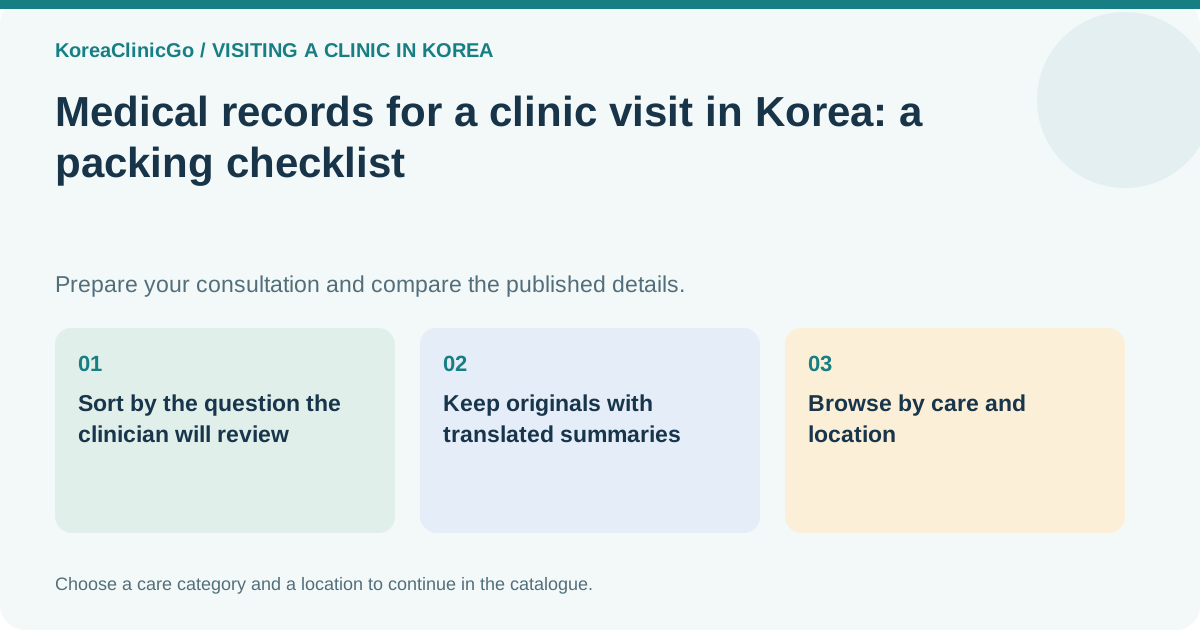
- Sort by the question the clinician will review
- Keep originals with translated summaries
- Check image and file compatibility
- Ask for the next set of records before leaving
- Make a one-page index that helps the clinic find the evidence
- Distinguish documents needed for care from documents needed for administration
Sort by the question the clinician will review

Separate your main concern, relevant previous assessments and the questions you want answered. Keep the date and issuing organisation visible on each result. If a document belongs to a different episode of care, label it accordingly so that an old result is not mistaken for a current finding.
Keep originals with translated summaries
A short English summary can make the consultation easier, but retain the original document and measurement units. If a translation changes the name of a medicine, test or procedure, ask for clarification before treating the terms as identical. Find out whether the clinic requires a particular translation format for the purpose involved.
Check image and file compatibility
If a previous clinic supplied scans or other images, ask the receiving clinic how it can review them. A photograph of a report may not contain the same information as the original imaging file. Keep backups, but avoid uploading sensitive material through an unverified account or a public enquiry page.
Ask for the next set of records before leaving
Find out how to obtain the consultation summary, results and any plan that will matter after you return home. Confirm when the documents will be ready and whether a charge applies. The catalogue is a starting point for locating relevant services, not a secure substitute for the clinic’s agreed document-sharing process.
Browse Seoul clinics on KoreaClinicGo → · Browse Busan clinics on KoreaClinicGo →
Make a one-page index that helps the clinic find the evidence
An index can list the concern, document dates, issuing organisations and file names without copying every detail into an enquiry. Group imaging, laboratory reports, procedure notes and medication information separately. Keep reference ranges and measurement units attached to laboratory values. If a scan exists in an original file format, retain it alongside the written report; a cropped screenshot may omit information that the receiving clinician needs.
Label old and recent records clearly. A normal result from a previous visit does not explain a new symptom by itself, and a historical abnormality is not automatically your current diagnosis. Tell the clinician what has changed since each assessment. If the receiving clinic requests additional files, ask for a verified transfer route and the format it can accept rather than repeatedly sending large attachments through different channels.
Distinguish documents needed for care from documents needed for administration
A clinician may need a treatment report, while an insurer or employer may require a particular certificate. Those purposes should not be combined into a vague request for “all English documents”. Ask which document the receiving organisation accepts and whether an original, translation or certification is required. A translated summary can support understanding without having the same administrative status as the original record.
Before leaving the clinic, ask how results and reports will be released, whether identity verification is required and whether collection can be remote. Save the payment record for document fees separately from treatment charges. KoreaClinicGo’s catalogue is for browsing published information; avoid placing complete sensitive records into a general catalogue enquiry when a brief description would identify the service you need.
Continue planning
Sources and editorial scope
KoreaClinicGo editorial team · Updated 2026-10-19. General information and visit planning.
Read the sources
Medical references support general understanding. They do not provide an individual diagnosis or treatment plan, or confirm a Korean clinic’s services.
Continue exploring with KoreaClinicGo
Use KoreaClinicGo.com to explore care categories in the region you plan to visit. Read the published services and branch details, then narrow your options at your own pace.
This guide does not rank or recommend individual hospitals. Confirm current opening status and appointment availability with the exact branch before travelling.