VISITOR GUIDE · 2026-10-19
Pattern hair loss in Korea: consultation, options and long-term planning
A hair-loss consultation in Korea should help you understand the pattern and make a sustainable decision. Buying a one-day procedure is different from planning care for a gradual change that you may want reviewed over time.
In this guide
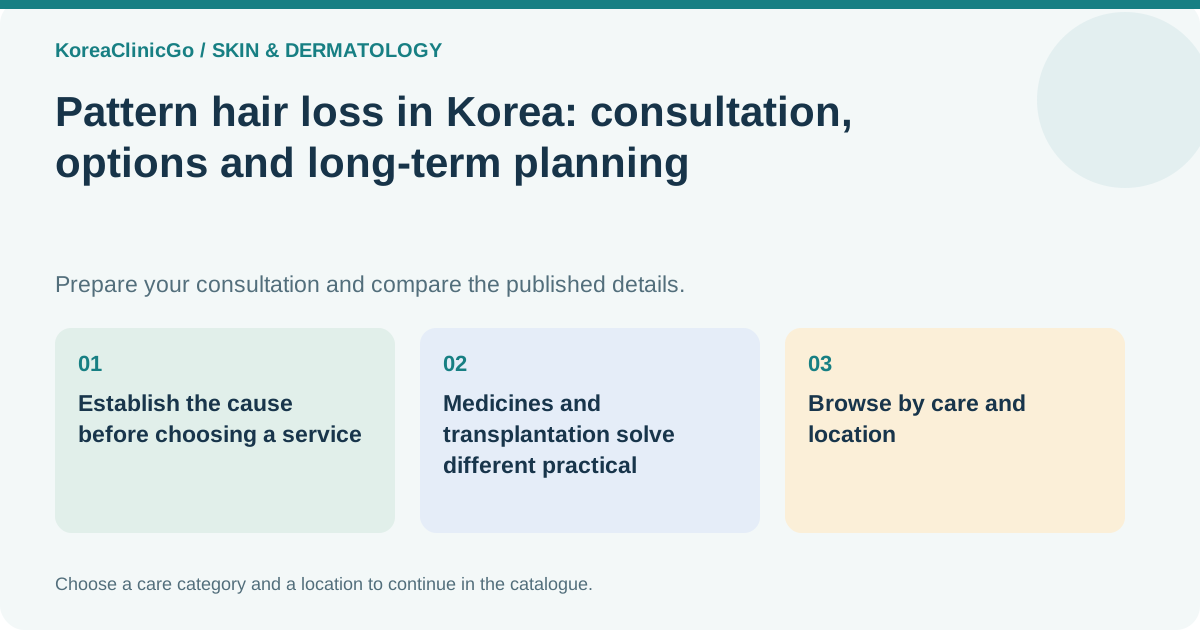
- Establish the cause before choosing a service
- Medicines and transplantation solve different practical problems
- Avoid using a short-trip mirror check as a result deadline
- Read a graft-based estimate carefully if surgery is discussed
- Consider continuity costs over a realistic year of care
- Bring a timeline rather than only a target photograph
- Separate medical management from surgical planning
- Compare like-for-like financial estimates
- Discuss the practical limits of a short visit
- Make the next decision explicit
- How can I avoid comparing hair photographs unfairly?
Establish the cause before choosing a service

Hereditary or pattern hair loss can cause gradual thinning, a widening part or a receding hairline. The American Academy of Dermatology distinguishes it from other causes, including sudden or patchy loss. Its hair-loss causes overview explains why identifying the cause matters. Ask a doctor whether your current change fits that pattern and whether anything else needs investigation before discussing medicines or elective procedures.
Medicines and transplantation solve different practical problems
The AAD describes medical treatment and hair-restoration approaches within hair-loss care, with selection following assessment of the cause. Some medicines require continued use to maintain benefit, and transplantation has its own suitability and recovery considerations. AAD hair-loss treatment is general guidance, not confirmation of a Korean product's approval or suitability for you.
A transplant estimate should not replace discussion of ongoing hair loss, and a prescription visit should not imply that a surgical option has been assessed. Keep the purpose and responsibilities of each proposed route explicit before comparing costs.
Avoid using a short-trip mirror check as a result deadline
Hair-loss care involves several clocks: checking treatment tolerance, reviewing the pattern and assessing a longer-term change in hair appearance. Have the clinician define the relevant interval for the proposed option. AAD treatment guidance explains that results can take months and continuing care may be needed. For a visit lasting days, the realistic deliverable is a sound assessment and plan. A new hairstyle, camouflage or immediate post-procedure image can change how a photograph looks without answering the longer-term question you booked the consultation to resolve.
Read a graft-based estimate carefully if surgery is discussed
Ask what the unit means, how the proposed number was determined, which region it covers and whether the estimate is provisional until examination. Record the named technique, clinician responsibilities, planned checks and the handling of any change in scope. Keep anaesthesia, medicines, supplies and postoperative review visible in the total.
A cost per graft can look precise while leaving the area, density plan or included care unclear. Avoid calculating a personal surgical requirement from a catalogue photograph; that decision belongs to clinical assessment. Your comparison sheet should capture the actual proposal rather than infer one from an advertised unit rate.
Consider continuity costs over a realistic year of care
For a medicine-led plan, list the prescribed supply, reviews and any proposed tests without assuming that every patient needs the same monitoring. For a procedure-led plan, add the appointments and care it actually entails. Identify which steps can occur at home and which would require another trip.
Include the practical cost of interpretation and obtaining records if relevant. This is a budgeting exercise, not an endorsement of an expensive option. It can reveal that a simpler plan supervised near home fits better than a discounted international package whose later decisions and responsibilities have not been arranged.
Bring a timeline rather than only a target photograph
Choose a few older images showing your hairline or part in comparable views. Note when you noticed thinning, any periods of sudden shedding and previous diagnoses. List treatments with their duration, tolerance and prescriber. Include relevant illnesses, medicines and supplements for the doctor to consider. If you have had a transplant or another scalp procedure, bring its records and explain what you hope this new consultation will add.
Browse Seoul clinics on KoreaClinicGo → · Browse Busan clinics on KoreaClinicGo →
Separate medical management from surgical planning
Ask whether the appointment is for diagnosis, ongoing treatment review or assessment for hair restoration surgery. If several services are offered, request an explanation of their different purposes. Ask who would supervise medicines, how results would be reviewed and what alternatives suit someone who cannot return regularly. A surgical quotation should follow a clinical suitability assessment; it should not replace discussion of the condition or of what you can reasonably continue after travel.
Compare like-for-like financial estimates
For medical care, ask about consultation, tests, prescription supply and review costs. For a proposed procedure, request its exact scope, how the price is calculated and what later checks are included. Keep optional cosmetic products separate from the core plan. Ask for cancellation and refund terms before paying a deposit. An estimate in grafts, sessions or treatment areas cannot be compared fairly until the clinic explains what those units mean in your case.
Discuss the practical limits of a short visit
Tell the clinician how much time you have in Korea and whether future appointments would be possible. Ask when a response or result should be evaluated and what records would support assessment at home. If a procedure requires checks or specific care after the appointment, include those dates before deciding whether to proceed. Avoid judging long-term change from a photograph taken immediately after styling, treatment or a different haircut during the holiday.
Make the next decision explicit
At the end of the consultation, ask what the next step is, who is responsible for it and when it should happen. Obtain a summary of the assessment and any proposed treatment, including generic medicine names where relevant. Arrange a doctor at home if continuing supervision is required. Keep your priorities visible: a stable routine, tolerable treatment and an understandable review plan may be more valuable than adding several unfamiliar interventions in a single trip.
How can I avoid comparing hair photographs unfairly?
Use similar views, lighting and hair partings, and keep the dates. Ask the clinician when comparison becomes useful rather than relying on differences caused by styling or a haircut during the trip.
Continue planning
Sources and editorial scope
KoreaClinicGo editorial team · Updated 2026-10-19. General information and visit planning.
Read the sources
Medical references support general understanding. They do not provide an individual diagnosis or treatment plan, or confirm a Korean clinic’s services.
Continue exploring with KoreaClinicGo
Use KoreaClinicGo.com to explore skin clinics in the region you plan to visit. Read the published services and branch details, then narrow your options at your own pace.
This guide does not rank or recommend individual hospitals. Confirm current opening status and appointment availability with the exact branch before travelling.