VISITOR GUIDE · 2026-10-19
Wisdom tooth care in Korea: removal assessment and recovery planning
A wisdom tooth consultation should answer whether removal is appropriate before it answers how quickly an extraction can be booked. NHS information notes that a tooth causing no problems may be monitored, while problematic wisdom teeth may need treatment or specialist referral. If you are visiting Korea, use the appointment to understand the individual tooth, the proposed procedure and the review arrangements rather than treating every extraction as an identical service.
In this guide
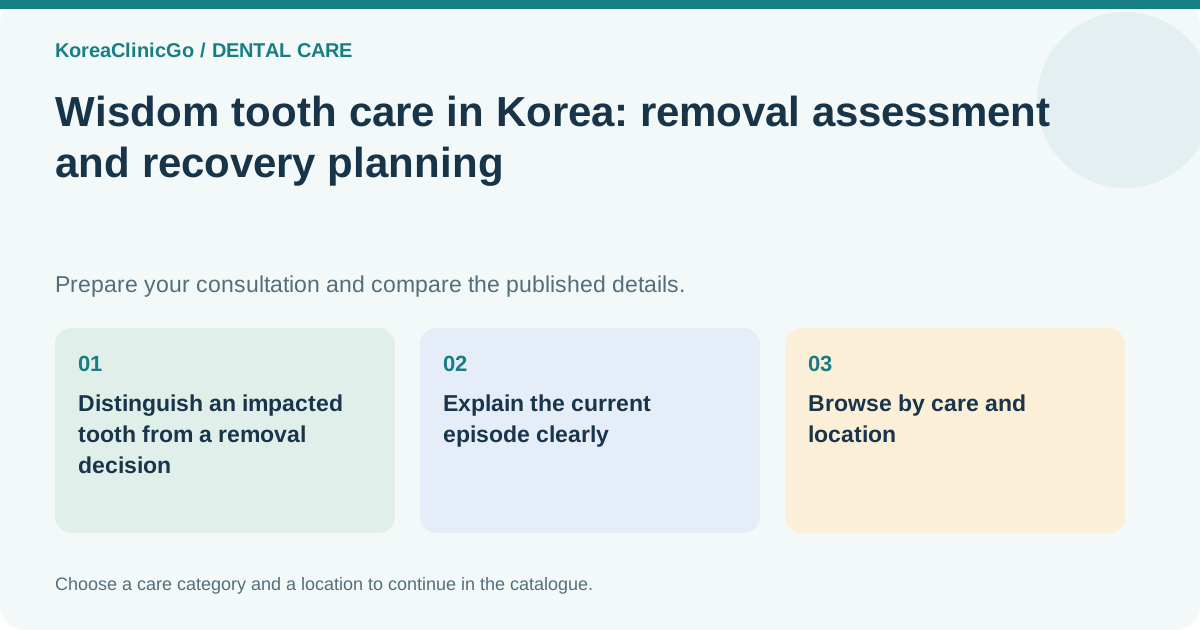
- Distinguish an impacted tooth from a removal decision
- Explain the current episode clearly
- Understand what makes extraction appointments different
- Discuss position and referral needs
- Separate the extraction from related charges
- Reserve time for the actual recovery plan
- Build a recovery plan around ordinary tasks
- Know how to request a postoperative review
- Should an assessment booking reserve a procedure automatically?
Distinguish an impacted tooth from a removal decision

An impacted wisdom tooth has not come through normally, but that description does not by itself settle whether removal is needed. NHS guidance explains that wisdom teeth can be monitored when they are not causing problems and that examination and X-rays may help assess their position. The consultation should explain the specific reason for a proposed extraction rather than treating the word impacted as a complete recommendation.
Ask what problem is being addressed: repeated symptoms, a finding affecting the tooth or surrounding area, or another issue identified during examination. Have the clinician separate an existing problem from a potential future concern and explain the options for each. If several wisdom teeth appear on a scan, request a separate recommendation for each tooth. Their presence in the same image does not automatically mean that the same procedure is appropriate for all of them.
Explain the current episode clearly
Record which side is uncomfortable, when the episode began and whether similar episodes have occurred before. Tell the clinic about earlier assessments and bring relevant imaging if available. Include your medication list and any history of difficulties with dental procedures. Ask whether the first booking is an assessment only. Sending a picture of a partially visible tooth can help identify the location, but it does not replace the examination needed to plan removal.
Understand what makes extraction appointments different
The NHS describes removal that may involve opening the gum, dividing a tooth and using stitches when needed. The method and setting depend on the individual assessment. Ask the dentist which features make your proposed removal more involved, what risks they want you to understand and whether they recommend specialist care. A service called surgical extraction should have a clearer explanation than a higher price or a longer appointment slot.
Ask who would perform the procedure and how decisions about pain control or sedation are made. If you are anxious, explain what has been difficult in earlier dental care so the team can discuss suitable arrangements. Do not assume sedation is included, necessary or equivalent to general anaesthesia. Request preparation, observation and departure instructions directly from the responsible team for the method actually proposed, including whether accompaniment must be arranged in advance.
Discuss position and referral needs
Ask the dentist to show the tooth on any imaging used and explain why observation, removal or referral is being proposed. Have the planned tooth number written down, particularly if several wisdom teeth are present. Ask what makes the proposed extraction straightforward or more involved in your case. The useful answer is an individual explanation of the procedure and risks, not a generic assertion that all wisdom teeth should be removed together.
Separate the extraction from related charges
Request an estimate identifying the tooth and the proposed type of procedure. Ask whether imaging, local anaesthesia, sedation if proposed, medication and postoperative review are included or separately charged. Clarify whether the price changes if referral or a different procedure is required. If several teeth are being considered, ask for the plan and fee for each rather than multiplying the lowest published extraction price by the number of teeth.
Browse Seoul clinics on KoreaClinicGo → · Browse Busan clinics on KoreaClinicGo →
Reserve time for the actual recovery plan
Before choosing a procedure date, tell the dentist when you leave Korea and what activities are already booked. Ask for an individual recommendation about review timing, diet, transport and return to normal activities. Discuss any escort requirements if sedation is proposed. Do not convert a clinic's estimated procedure duration into a recovery guarantee or assume that an appointment immediately before a flight is suitable for your circumstances.
Build a recovery plan around ordinary tasks
Recovery planning should consider eating, cleaning, resting and obtaining a review, not only the moment of extraction. NHS information describes possible postoperative discomfort and complications, but another patient's experience cannot predict your own course. Ask the treating dentist what they expect you to manage after the particular procedure and how to recognise a reason to contact the service sooner.
Think through your actual accommodation: where could you rest, obtain suitable food and return for an examination if needed? If your itinerary involves changing cities, ask whether this affects review arrangements. Clarify whether planned check-ups, dressings or further imaging would be included or separately quoted. Keep urgent contact instructions accessible offline and obtain a concise record for another dentist. Avoid selecting the final afternoon of a trip solely because the procedure itself appears to fit into that free time.
Know how to request a postoperative review
Ask for written care instructions and a contact route that will be answered during your stay. NHS guidance identifies persistent bleeding, severe or worsening pain and swelling, or pain with fever and feeling unwell as reasons for urgent dental advice after removal. Obtain the treating clinic's specific instructions about such concerns and seek local care if necessary. Keep a summary of the extraction and medicines so a clinician elsewhere can understand what was done.
Should an assessment booking reserve a procedure automatically?
Ask the practice to keep the purposes distinct. Confirm whether the booking is an examination, whether a procedure would require a separate decision and what charges apply to each. That leaves room to understand the findings and alternatives without treating the appointment request itself as consent to extraction.
Continue planning
Sources and editorial scope
KoreaClinicGo editorial team · Updated 2026-10-19. General information and visit planning.
Read the sources
Medical references support general understanding. They do not provide an individual diagnosis or treatment plan, or confirm a Korean clinic’s services.
Continue exploring with KoreaClinicGo
Use KoreaClinicGo.com to explore dental clinics in the region you plan to visit. Read the published services and branch details, then narrow your options at your own pace.
This guide does not rank or recommend individual hospitals. Confirm current opening status and appointment availability with the exact branch before travelling.