VISITOR GUIDE · 2026-10-19
Thyroid Checks in Korea: Blood Tests, Imaging and Result Questions
A thyroid check can mean reviewing blood results, assessing symptoms or following an existing nodule. Clarify the purpose before booking so the appointment does not become a collection of tests without a question to answer.
In this guide
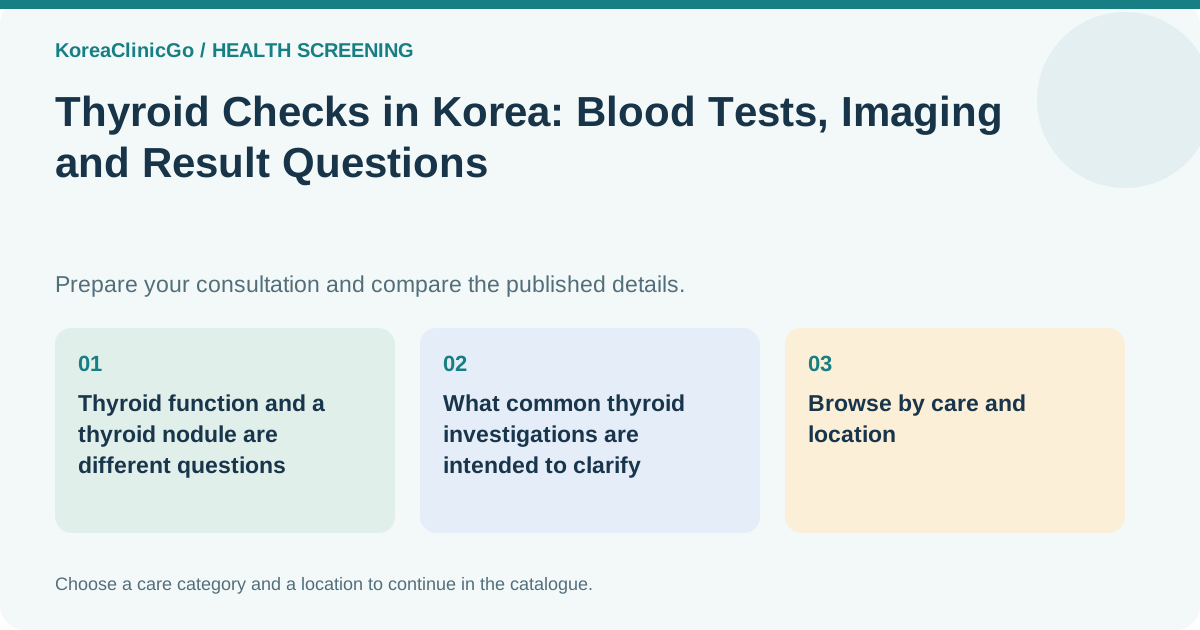
- Thyroid function and a thyroid nodule are different questions
- What common thyroid investigations are intended to clarify
- Treatment is determined by the condition, not the scan label
- Identify the question you want answered
- Prepare results with units and dates
- Avoid an undefined thyroid-check quotation
- Discuss the reason for each investigation
- Use a short visit to coordinate a longer decision
- Continue care with the complete record
Thyroid function and a thyroid nodule are different questions

The thyroid makes hormones involved in how the body uses energy. Too little hormone is described as hypothyroidism; too much is hyperthyroidism. A nodule is a structural finding rather than another name for abnormal hormone production. These issues may overlap, but a blood test and an ultrasound do not answer the same question.
NIDDK notes that symptoms such as tiredness or weight change are not sufficient to diagnose a thyroid condition. That distinction helps a visitor choose a consultation for the actual concern instead of assuming a general thyroid screening package covers every possibility.
What common thyroid investigations are intended to clarify
Thyroid-stimulating hormone, often abbreviated TSH, and thyroid hormone measurements help clinicians assess function. Antibody tests can support investigation of certain autoimmune causes. Ultrasound is used for structural questions such as evaluating a nodule, while sampling is considered for selected findings rather than every lump.
Results need their units, laboratory ranges and clinical context. A general medical or endocrinology assessment may lead to further imaging or another specialist pathway. The appropriate sequence depends on what has already been established. Ordering every available test at once is not a substitute for explaining the main question and the next decision.
Treatment is determined by the condition, not the scan label
For confirmed hypothyroidism, thyroid hormone replacement is a common treatment and requires monitoring. Hyperthyroidism has different treatment options, including antithyroid medicines, radioiodine or surgery in selected circumstances. These are not interchangeable ways of treating a nonspecific symptom such as low energy.
NIDDK emphasizes individualized choice and review; personal circumstances, including pregnancy, can affect options. A short visit does not provide enough information to decide independently that an existing prescription should be stopped or changed. A treatment discussion should identify the diagnosis being managed and how the effect and safety of a change will be checked.
Identify the question you want answered
State whether you have symptoms needing assessment, an abnormal blood result, a known thyroid condition or an earlier scan finding. NIDDK describes hormone blood tests and imaging investigations with different roles; a scan and a blood result are not interchangeable answers. Bring the document that prompted the appointment instead of a message saying your thyroid is abnormal. If a lump was described, preserve its location and the report's wording. Identify which questions were already answered and which your usual clinician still wants reviewed.
Prepare results with units and dates
Keep full laboratory reports, including reference ranges, specimen dates and accompanying notes. Do not copy numbers into a table without their units. Ask your original provider for ultrasound images and reports, or sample-analysis results if these exist. Label dates clearly so the clinician can compare the sequence rather than assume reports were taken together. A timeline can show when a medicine was started or changed without interpreting its effect yourself. Include both original records and translations so important qualifications are not lost.
Browse Seoul clinics on KoreaClinicGo → · Browse Busan clinics on KoreaClinicGo →
Avoid an undefined thyroid-check quotation
A fee may refer only to a blood sample, only to an ultrasound or to a clinician's consultation. Compare the actual elements: named tests, imaging interpretation, result discussion and any proposed sampling or pathology. If further assessment is recommended, it should have a separate estimate rather than appear as an assumed inclusion in the original package.
When a prescription changes, later laboratory and review costs may belong to the plan as well. A larger test list is not automatically better value if it omits an explanation of why the additional measurements are useful in your situation.
Discuss the reason for each investigation
Ask what a proposed test would clarify and how its result could change management. If ultrasound is offered, ask how findings will be compared with earlier images. If sampling or specialist assessment is discussed, establish what happens after the result, not only how quickly the procedure can be booked. Confirm whether sampling, interpretation and follow-up are separate charges. Give your departure date and ask who will review results available after you leave Korea. Check insurer authorization before paying for optional additions.
Use a short visit to coordinate a longer decision
An international visitor may be able to clarify a previous result or obtain an organized specialist opinion without completing every stage of treatment during the stay. Monitoring after a medicine change may extend beyond the trip, and any planned review must have an identified professional at home or an agreed arrangement with the treating service.
For a nodule, keep the images and exact report wording so later comparison is possible. If an intervention is considered, the reason, alternatives and follow-up should be documented before travel logistics influence the decision. A collection of normal or abnormal labels cannot serve as that handover.
Continue care with the complete record
Request a summary distinguishing confirmed findings, the working explanation and remaining questions. Ask when reassessment is needed and whether your usual clinician can provide it. Keep laboratory and imaging files with the medicine list. If the plan changes, have the reasons documented so another professional can understand them.
A health screening catalogue can help you explore services by location, but it cannot determine which thyroid tests you need. Choose an appointment that includes interpretation and a route to further care, rather than judging the value by the number of tests alone.
Continue planning
Sources and editorial scope
KoreaClinicGo editorial team · Updated 2026-10-19. General information and visit planning.
Read the sources
Medical references support general understanding. They do not provide an individual diagnosis or treatment plan, or confirm a Korean clinic’s services.
Continue exploring with KoreaClinicGo
Use KoreaClinicGo.com to explore health checkup clinics in the region you plan to visit. Read the published services and branch details, then narrow your options at your own pace.
Browse health checkup clinics →
This guide does not rank or recommend individual hospitals. Confirm current opening status and appointment availability with the exact branch before travelling.