VISITOR GUIDE · 2026-10-19
Sinus Symptom Assessment in Korea: A Consultation Planning Guide
Facial pressure and a blocked nose can make a journey uncomfortable, especially when symptoms recur. An assessment should consider the full pattern; visitors should not have to decide in advance whether the problem needs antibiotics, a scan or an operation.
In this guide
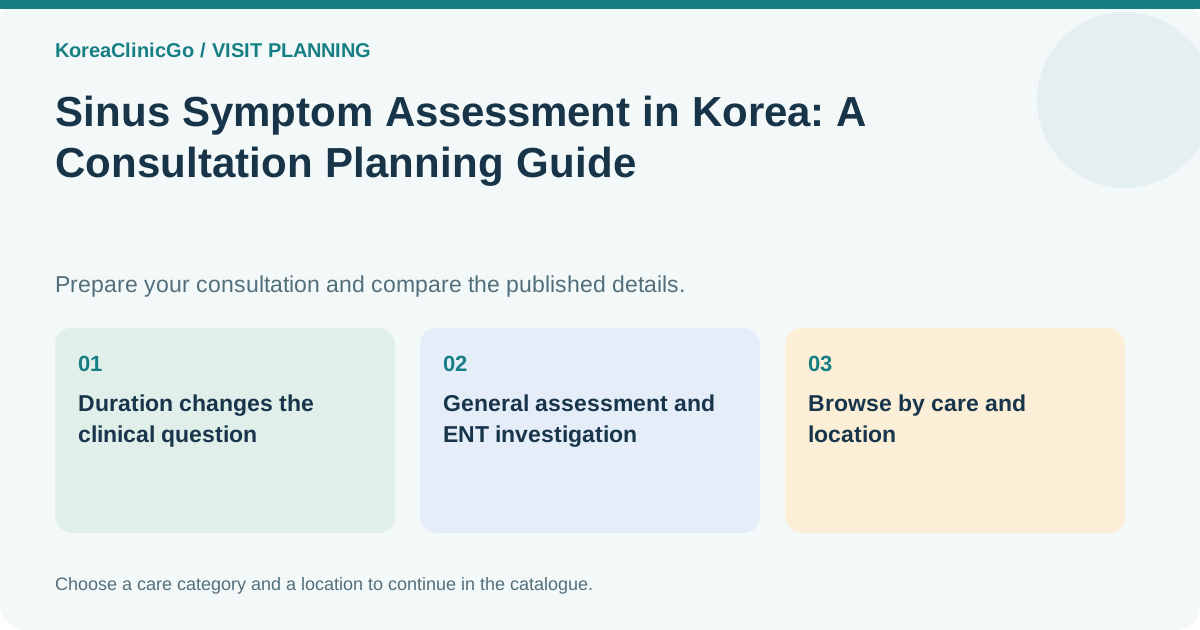
- Duration changes the clinical question
- General assessment and ENT investigation
- Medical care before a surgery decision
- Explain the location and course of symptoms
- Bring ENT and dental information when relevant
- Cost components change if investigation becomes procedural
- Plan around transport and report timing
- Think beyond the day symptoms are treated
- Arrange review and recognize the need for earlier help
Duration changes the clinical question

The sinuses are air-filled spaces around the nose, and swelling can interfere with normal mucus drainage. A recent episode following a cold, repeated separate episodes and symptoms that continue over many weeks are different patterns.
MedlinePlus distinguishes acute, chronic and recurrent sinusitis; these labels depend on the clinical history, not simply on how uncomfortable the face feels. Allergy and structural nasal problems can also be relevant. A blocked nose or coloured mucus alone cannot establish the cause, and a headache should not automatically be assumed to arise from the sinuses.
General assessment and ENT investigation
A clinician reviews symptoms and examines the nose and face. Persistent, repeated or one-sided problems may prompt specialist ENT assessment, while imaging is considered for the particular question being investigated. A scan is not an automatic requirement for every recent congested nose.
If an ENT examination is proposed, the consultation should explain what part of the assessment it provides and whether other tests are needed. Prior images and treatment history can be useful, but they should be interpreted against the current episode. A catalogue category is a way to find relevant services, not proof that every provider performs the same examinations.
ENT means ear, nose and throat. When booking, state whether the concern is a new episode or a review of continuing symptoms, rather than requesting an unspecified sinus treatment.
Medical care before a surgery decision
NHS information describes options including nasal steroid treatment and, when allergy is relevant, antihistamines. Antibiotics are not routinely needed for sinusitis. The choice depends on assessment rather than on the duration of the trip. Surgery may be considered for selected continuing problems; functional endoscopic sinus surgery aims to improve sinus drainage by addressing obstructing tissue or openings.
It is not a universal treatment for nasal symptoms, and discussing it requires the findings, alternatives and postoperative pathway to be understood. Symptom relief after a medicine or a rinse does not itself establish the cause of a recurring problem.
Explain the location and course of symptoms
Write whether symptoms involve one side or both, which areas feel uncomfortable and how long the episode has lasted. Note changes in smell, discharge, fever or ear pressure without treating one feature as proof of infection. Include any preceding cold and similar earlier episodes. NHS guidance describes several symptoms associated with sinusitis and recommends review for persistent or recurring problems. A dated timeline makes it easier to distinguish one continuing episode from separate episodes during a long stay or while changing accommodation.
Bring ENT and dental information when relevant
If you have earlier ENT assessments, scans, operations or allergy reports, bring the full documents. Note which side was investigated and when. If dental symptoms or recent dental treatment are part of the history, include them for the clinician to consider rather than deciding they are unrelated. List sprays, medicines and other products used, with ingredient names where possible. Keep instructions from a previous clinician so a new provider can understand the intended plan instead of starting with a list of brands alone.
Browse Seoul clinics on KoreaClinicGo → · Browse Busan clinics on KoreaClinicGo →
Cost components change if investigation becomes procedural
A consultation-only visit, imaging appointment and operation are different episodes. An ENT estimate should state whether an examination, image review and written interpretation are included. If surgery is recommended, anaesthesia, admission or observation, postoperative examinations and any additional care need to be specified separately. If laboratory samples are taken, there may be a later report and discussion. Comparing headline prices without the same investigation or treatment scope can be misleading. Obtain the estimate for the actual plan after assessment, not for an assumed diagnosis selected from a symptom description.
Plan around transport and report timing
Tell the clinician about upcoming travel and ask whether symptoms or a proposed procedure affect those plans. Seek individual advice rather than assuming a fixed flying rule applies to everyone. If tests are arranged, ask when reports will be ready and who can explain them after you have left Korea. Request costs for consultation, examination, imaging and review separately. If treatment involves several stages, put every appointment beside your itinerary before paying for a course, including any additional visit needed to discuss outstanding findings.
Think beyond the day symptoms are treated
A visitor with repeated episodes may benefit from a clearer explanation and a longer-term pathway even if no procedure happens during the trip. Record which treatment was already tried and the date a review is expected, so the same unsuccessful step is not repeated indefinitely in another country.
If a procedure is considered, the ability to attend postoperative examinations matters as much as the initial appointment. Give the clinician your planned transport and departure details for individualized advice. A treatment date close to a flight is not evidence that the full care pathway fits the stay.
Arrange review and recognize the need for earlier help
Feeling very unwell, worsening symptoms or pain that is not helped by usual measures should prompt urgent medical advice, as NHS guidance describes. A routine catalogue inquiry is not an urgent assessment service. After a planned visit, obtain the working assessment, investigation reports and treatment instructions. Ask which changes require another examination and when progress should be reviewed if the problem continues. Your clinician at home needs original findings and dates, not only a summary saying sinus treatment was completed during the trip.
Continue planning
Sources and editorial scope
KoreaClinicGo editorial team · Updated 2026-10-19. General information and visit planning.
Read the sources
Medical references support general understanding. They do not provide an individual diagnosis or treatment plan, or confirm a Korean clinic’s services.
Continue exploring with KoreaClinicGo
Use KoreaClinicGo.com to explore general and specialist clinics in the region you plan to visit. Read the published services and branch details, then narrow your options at your own pace.
Browse general and specialist clinics →
This guide does not rank or recommend individual hospitals. Confirm current opening status and appointment availability with the exact branch before travelling.