VISITOR GUIDE · 2026-10-19
Reflux Care in Korea: Preparing for a Digestive Consultation
Burning discomfort can have more than one explanation. Sudden persistent chest discomfort, pain spreading into an arm, neck, jaw, back or stomach, or chest symptoms with breathlessness, sweating, nausea or lightheadedness require immediate emergency assessment. Do not assume these symptoms are reflux or wait for a routine enquiry. For non-urgent reflux concerns, this guide explains the assessment, treatment discussions and costs to clarify before a Korea clinic visit.
In this guide
- Occasional reflux and a continuing digestive problem
- Endoscopy and reflux monitoring answer different questions
- Treatment can relieve symptoms through different mechanisms
- Describe timing and associated symptoms
- Bring the treatment history in recognizable terms
- Separate the scope fee from the full episode of care
- Schedule preparation and result discussion
- A short stay still needs a result pathway
- Create a practical plan for home
Occasional reflux and a continuing digestive problem

Reflux describes stomach contents travelling back towards the oesophagus, the tube carrying food to the stomach. Heartburn is a symptom, while persistent reflux disease is a clinical assessment rather than a name for every episode of chest burning.
Symptoms can overlap with other problems, which is why a previous reflux diagnosis does not settle a new or substantially changed complaint. A general medical consultation may be the first step; gastroenterology becomes relevant when the history or investigations require specialist digestive assessment. Choose the service around the question being evaluated rather than a promotional endoscopy package.
Endoscopy and reflux monitoring answer different questions
NIDDK explains that doctors can sometimes assess likely reflux from symptoms and history without immediate testing. When indicated, upper gastrointestinal endoscopy examines the lining of the oesophagus and stomach and can allow tissue sampling. Reflux monitoring instead records reflux exposure and its relationship to reported symptoms.
These investigations are not interchangeable. A visually normal examination does not answer every question addressed by monitoring, and monitoring is not a routine addition for every visitor with heartburn. The proposed test should have a stated purpose, with preparation, reporting and follow-up planned around that purpose.
If tissue is sampled, the endoscopy observation and the later pathology finding are separate records. Keep both, including the date each was issued and who interpreted the result.
Treatment can relieve symptoms through different mechanisms
Antacids are used for some mild symptoms; H2 blockers and proton pump inhibitors reduce acid production. The appropriate choice and duration depend on assessment and other medicines. These are categories to discuss with a professional, not instructions to combine products or prescribe your own regimen.
Lifestyle measures may form part of care. Surgery is reserved for selected circumstances and carries different risks from medicine treatment; an operation is not simply a stronger heartburn remedy. Persistent symptoms despite treatment may require the original explanation to be reviewed instead of repeatedly extending the same course without a plan.
Describe timing and associated symptoms
Keep a brief record of when the discomfort occurs, its location and whether it relates to meals, lying down or particular activities. Explain any sour taste, difficulty swallowing or change from your usual symptoms. Record the duration of the problem and which days are affected. NHS guidance advises medical review for frequent heartburn or accompanying problems such as food getting stuck, repeated vomiting or unexplained weight loss. Do not simply label every new chest symptom as reflux because you have experienced heartburn before.
Bring the treatment history in recognizable terms
List medicines you currently take and those previously tried for the symptoms, including active ingredients when available. Note whether a course helped and when symptoms returned. Bring earlier endoscopy reports, biopsy results and relevant laboratory reports if you have them. A note saying a previous scope was normal is less useful than the full dated report. Include known allergies and other medical conditions. Avoid changing or stopping an existing prescription to prepare for a visit unless your treating clinician gives you instructions.
Browse Seoul clinics on KoreaClinicGo → · Browse Busan clinics on KoreaClinicGo →
Separate the scope fee from the full episode of care
If endoscopy is recommended, the estimate should distinguish the clinical consultation, procedure, sedation if used, tissue sampling and pathology interpretation. A sample may produce a later report, so a same-day procedure price does not necessarily include the full diagnostic process. Reflux monitoring has its own equipment and interpretation arrangements.
Where a procedure is not indicated, a consultation and an agreed review may be the relevant services. Published prices for screening and investigation of symptoms may describe different packages; compare their actual inclusions rather than assuming they have identical clinical purposes.
Schedule preparation and result discussion
If a procedure is agreed, ask about fasting, sedation choices, accompaniment and restrictions afterwards. Obtain individualized instructions rather than applying a generic travel timetable. Tell the clinic the date you leave Korea and ask when all reports, including sample analysis, should be available. Find out whether result discussion can occur after departure and who will take responsibility for further action. Request an estimate separating assessment, the procedure, sedation, samples and follow-up so an advertised price is not mistaken for the complete episode.
A short stay still needs a result pathway
A visitor whose main issue is understanding recurring symptoms may use the trip for assessment and a clearly defined next step without completing every investigation in Korea. If endoscopy is performed, identify who will discuss any delayed pathology and whether a further appointment can take place after departure.
If a trial of treatment is agreed, clarify the review responsibility rather than planning to judge the result after only a few days. Keep a copy of the treatment rationale with the findings, so a clinician at home can continue from the same question instead of repeating the entire assessment.
Create a practical plan for home
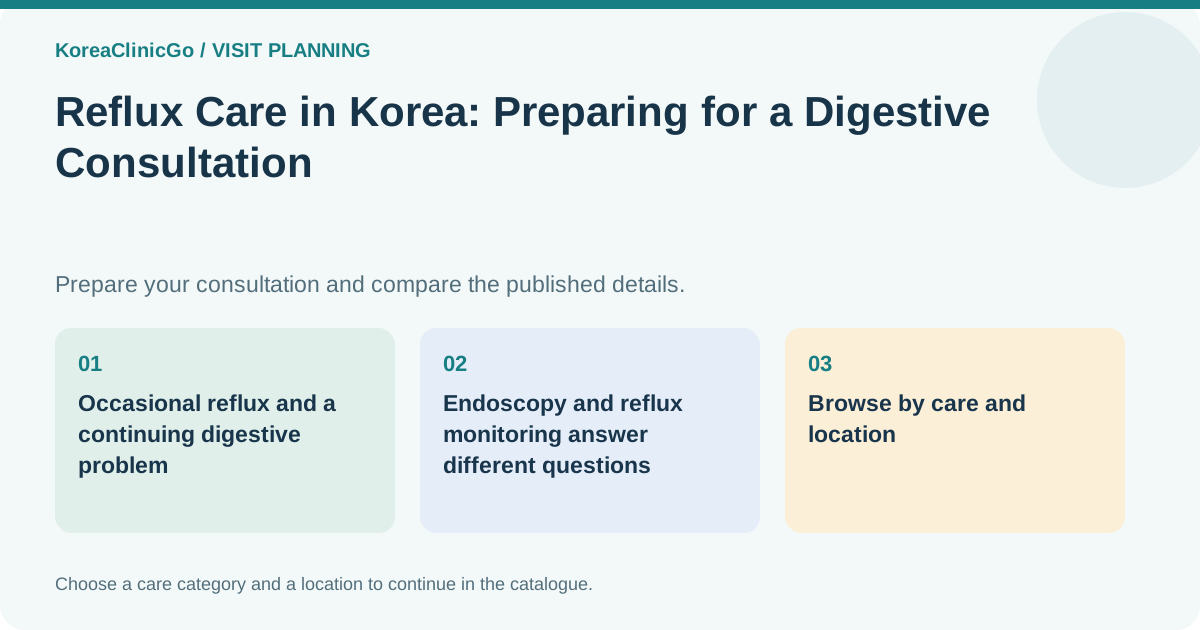
Ask for the clinician's working explanation, any uncertainty and the next review point in writing. If a prescription is supplied, obtain active ingredient names and directions from the treating team so your usual clinician can review them. Keep reports and images in their original format alongside a translation. Check your insurer's distinction between evaluation of symptoms and optional screening before paying. To explore services, browse a general care catalogue and choose a location; individual suitability still needs confirmation during clinical assessment.
Continue planning
Sources and editorial scope
KoreaClinicGo editorial team · Updated 2026-10-19. General information and visit planning.
Read the sources
Medical references support general understanding. They do not provide an individual diagnosis or treatment plan, or confirm a Korean clinic’s services.
Continue exploring with KoreaClinicGo
Use KoreaClinicGo.com to explore general and specialist clinics in the region you plan to visit. Read the published services and branch details, then narrow your options at your own pace.
Browse general and specialist clinics →
This guide does not rank or recommend individual hospitals. Confirm current opening status and appointment availability with the exact branch before travelling.