VISITOR GUIDE · 2026-10-19
Kidney Stone Assessment in Korea: Records, Imaging and Onward Care
A known stone found earlier and a new episode of severe pain are different reasons for seeking care. Start by explaining which situation applies, then organize the records needed to understand what has been established and what still needs assessment.
In this guide
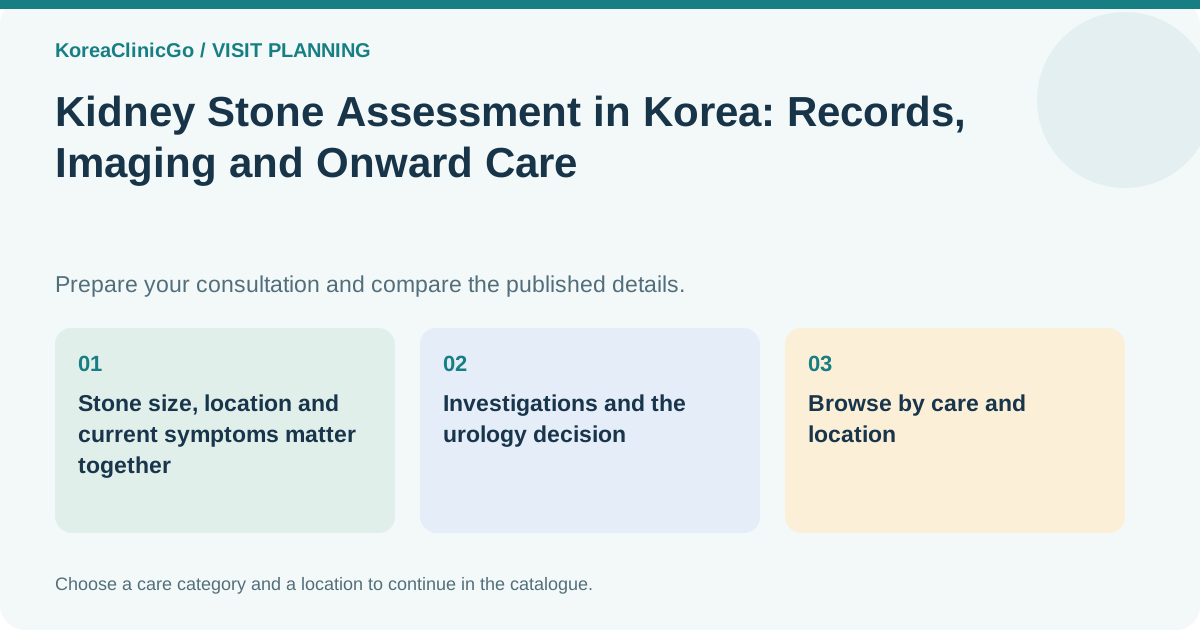
- Stone size, location and current symptoms matter together
- Investigations and the urology decision
- Observation and removal are different pathways
- Distinguish an earlier finding from current symptoms
- Do not wait on a routine inquiry when acutely unwell
- Identify staged care before comparing prices
- Consider the whole pathway if intervention is discussed
- Plan the second decision before committing to the first
- Arrange follow-up with the underlying evidence
Stone size, location and current symptoms matter together

A kidney stone is not one uniform condition with one standard procedure. NIDDK describes treatment decisions based on the stone's size, location and type. An earlier incidental finding and a current painful episode may require different decisions.
A measurement remembered from an old report cannot establish whether the urinary tract is obstructed now or whether the symptoms have another cause. The clinical assessment therefore needs current history and appropriate investigation. A visitor should not decide between procedures solely from a catalogue label or assume that every stone needs removal during the same trip.
Investigations and the urology decision
History, examination, urine or blood tests and imaging can contribute to assessment. The investigation should clarify the question relevant to the case, such as where a stone is and whether another problem is present. A urological treatment decision follows that assessment.
A quote for stone removal is not a substitute for an evaluation of new symptoms. Prior images, laboratory findings and any earlier stone analysis should be reviewed in context rather than automatically repeated. The report should distinguish what has been demonstrated from an assumption based only on a previous diagnosis or a typical symptom description.
Observation and removal are different pathways
NIDDK notes that some small stones may pass, while stones causing obstruction, severe pain or other problems may need urgent treatment. Removal options include shock-wave treatment, ureteroscopy and, for selected larger stones, a procedure through a small opening in the back.
They have different indications and arrangements; they are not ordinary product upgrades. A temporary ureteral stent may be used in some pathways and can require later attention. The treatment decision should explain whether another visit or procedure is expected. Removing a stone also does not automatically resolve the question of why stones formed.
Distinguish an earlier finding from current symptoms
If a scan previously showed a stone, bring its full report and actual images, with dates and the side identified. Explain whether current symptoms were present at that time or are new. NIDDK describes assessment as involving history, examination and possible laboratory or imaging tests. A remembered stone measurement is not enough to establish what is happening now. If you have passed a stone or had one analysed previously, bring the analysis report and any follow-up instructions supplied by the treating clinician.
Do not wait on a routine inquiry when acutely unwell
NIDDK advises prompt medical attention for symptoms such as sharp back or side pain, blood in urine or difficulty passing urine; fever, chills, nausea or vomiting may also occur. These symptoms do not prove a stone and can indicate another problem. Use medical assessment rather than a routine catalogue message for an acute episode. Explain the symptoms directly to the receiving medical service and bring medicine and allergy information if you can. An existing diagnosis should not become a reason to dismiss a new change.
Browse Seoul clinics on KoreaClinicGo → · Browse Busan clinics on KoreaClinicGo →
Identify staged care before comparing prices
The estimate should distinguish assessment, imaging, the actual procedure, anaesthesia, admission or observation and subsequent reviews. If a stent or another temporary device is involved, placement and later management need to be clear. Sample analysis and a further assessment for recurrence may be separate.
A headline procedure price can be misleading if it leaves out a necessary later appointment that will occur after departure. Compare the complete intended pathway for the assessed stone rather than a generic list of removal methods, and confirm insurance authorization using the clinician's actual proposed plan.
If continuing care is arranged elsewhere, record the exact procedure and any temporary device details in the handover rather than leaving them only on a payment receipt.
Consider the whole pathway if intervention is discussed
If treatment is proposed, ask about preparation, anaesthesia where relevant, expected reviews and any equipment or temporary device that would need later attention. Establish whether another procedure or removal appointment may be required, who would perform it and how the dates fit your stay. Obtain a full estimate covering assessment, investigations, treatment and follow-up rather than one headline fee. Tell your insurer the actual proposed pathway and check authorization requirements. Do not assume that a short procedure appointment means all subsequent care can be completed before your flight.
Plan the second decision before committing to the first
For an international visitor, follow-up availability may determine whether an elective procedure is practical during the stay. Identify who will review progress and manage any temporary device, including after returning home. Keep the procedure record and device details accessible to that professional.
If further testing is advised to understand recurrence, record what it is intended to establish rather than starting broad dietary or medicine changes independently. A short visit can provide a documented opinion and next step, but it should not leave a staged treatment incomplete because the original booking considered only the initial procedure date.
Arrange follow-up with the underlying evidence
Ask for the clinician's explanation, treatment record and the questions that remain open. Keep any laboratory or stone-analysis report with the imaging files. If follow-up continues at home, identify who will review it and what information they need, including details of devices or procedures. Request individualized advice about travel and any further assessment rather than applying generic rules. For non-urgent service discovery, select a general care category and area in the catalogue, then confirm the relevant urology assessment and communication arrangements directly.
Continue planning
Sources and editorial scope
KoreaClinicGo editorial team · Updated 2026-10-19. General information and visit planning.
Read the sources
Medical references support general understanding. They do not provide an individual diagnosis or treatment plan, or confirm a Korean clinic’s services.
Continue exploring with KoreaClinicGo
Use KoreaClinicGo.com to explore general and specialist clinics in the region you plan to visit. Read the published services and branch details, then narrow your options at your own pace.
Browse general and specialist clinics →
This guide does not rank or recommend individual hospitals. Confirm current opening status and appointment availability with the exact branch before travelling.