VISITOR GUIDE · 2026-10-19
Gum disease care in Korea: assessment, cleaning scope and maintenance
Bleeding or changing gums deserve a dental assessment even when the main goal of your trip is cosmetic treatment. NIDCR describes gum disease as inflammation and infection affecting tooth-supporting tissues, with treatment depending on its extent. For visitors to Korea, a useful plan explains the findings, the area being treated and the maintenance that follows. A generic cleaning price cannot answer all three questions.
In this guide
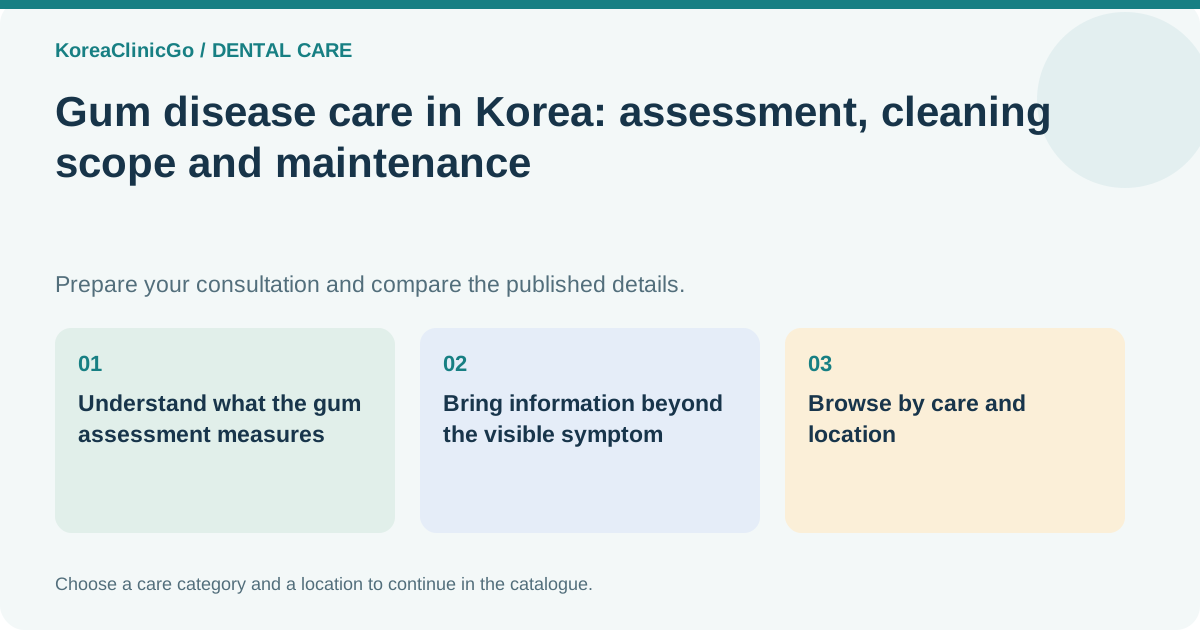
- Understand what the gum assessment measures
- Bring information beyond the visible symptom
- Distinguish routine cleaning, periodontal treatment and surgery
- Ask for a readable gum assessment
- Clarify what a cleaning quote covers
- Plan around reassessment rather than a single visit
- Connect the gum plan with the rest of your dentistry
- Arrange a maintenance routine you can continue
- What should the reassessment record contain?
- What is scaling and root planing intended to do?
Understand what the gum assessment measures

Gum assessment is about the supporting tissues around teeth, not only removal of visible staining. NIDCR describes examining inflammation, measuring spaces around teeth and using imaging when appropriate to assess supporting bone. A photograph of red gums cannot supply that complete information. Ask which findings are present, whether measurements were recorded and how the clinician will judge a change after treatment.
It helps to distinguish a whole-mouth overview from detailed findings at particular teeth. Ask the dentist to show where the proposed work applies and whether any areas have a different recommendation. If the explanation uses terms such as pocket depth or bone loss, request a plain-language account rather than trying to infer severity from one measurement copied into a message. Your review record should preserve the actual findings and their dates.
Bring information beyond the visible symptom
Write down when bleeding began, whether any teeth feel different and when you last had professional gum care. Tell the dentist about smoking, diabetes, medicines and earlier periodontal treatment. If another practice recorded gum measurements or supplied recent images, ask how to share them. These records provide context for the consultation; they do not establish that the same diagnosis or treatment plan still applies at your new appointment.
Distinguish routine cleaning, periodontal treatment and surgery
NIDCR describes scaling and root planing among periodontal treatments, with surgical approaches for some more advanced situations. These are not automatic additions to every cleaning appointment. Ask what the first proposed step is intended to achieve and what findings would lead to discussion of another step. If the clinician recommends specialist assessment, clarify the question they want the specialist to address.
For a visitor comparing prices, this distinction prevents a common mismatch: one estimate may cover routine cleaning while another describes treatment of several affected areas with planned reassessment. Have the clinician identify the scope and purpose before comparing totals. A lower price does not establish that the plans are clinically equivalent. Equally, a more extensive plan needs an explanation tied to your examination rather than the number of services a clinic can offer.
Ask for a readable gum assessment
Request an explanation of the examination findings and the areas that need attention. Ask the dentist to distinguish routine cleaning from a periodontal treatment plan, and whether a periodontal specialist is appropriate. If measurements are recorded, ask for a copy with the tooth numbers rather than an unexplained score. You should understand which findings will be checked again and what question the next appointment is intended to answer after the initial work.
Clarify what a cleaning quote covers
Ask whether the fee applies to the whole mouth, a quadrant, a tooth or a session. Request separate confirmation of any proposed deep cleaning, anaesthesia, imaging and review assessment. If a surgical option is discussed, seek a separate explanation and estimate rather than assuming it forms part of the original cleaning service. A useful comparison puts the number of areas and sessions next to the price so you can see the actual scope.
Plan around reassessment rather than a single visit
Ask how the dentist proposes to review the response to initial care and whether that review can occur during your stay. If it will happen after departure, agree who will perform it and what information they should receive. Tell the clinic about other dental work you are considering so the timing can be discussed together. Do not assume that completing a cleaning session means every gum concern has been resolved or that later appointments are optional.
Browse Seoul clinics on KoreaClinicGo → · Browse Busan clinics on KoreaClinicGo →
Connect the gum plan with the rest of your dentistry
Tell the dentist about implants, orthodontics, whitening or restorations you are considering, even if the appointments are with another practice. Ask whether the gum findings affect the order in which those plans should be considered. Do not independently combine a medical gum-treatment estimate with a cosmetic package simply because both fit on the calendar. The clinicians need enough information to discuss any relationship between them.
If your main goal is a second opinion, request copies of recorded measurements, images and the proposed sequence. Ask the next clinician to address the same clinical questions, including what would be monitored after the initial care. Keep daily-care instructions distinct from the list of procedures performed. Both matter, but buying a treatment session does not replace the ongoing home routine and reviews that the treating dentist recommends for your individual findings.
Arrange a maintenance routine you can continue
Ask for a demonstration of cleaning methods suitable for the areas identified at your examination, then request clear written instructions. Discuss the interval for future professional reviews with the treating team and your usual dentist. Keep the findings, treatment dates and any ongoing concerns in one summary. Before leaving, understand how the clinic handles questions after travel and which changes should prompt a local examination rather than waiting for your next visit to Korea.
What should the reassessment record contain?
Ask for the date, areas reviewed, relevant repeated measurements and the clinician's explanation of the next step. Keep the earlier findings alongside the new ones. This lets a receiving dentist distinguish treatment performed from a recommendation for further care, rather than assuming that an invoice for cleaning documents a complete reassessment of every affected area.
What is scaling and root planing intended to do?
NIDCR describes scaling and root planing as deeper cleaning of affected teeth in periodontal care. Its purpose differs from changing tooth colour or buying a cosmetic polishing service. The clinician should explain where that treatment is recommended and how the supporting tissues will be reassessed. Surgical care is a separate possible discussion for selected findings, not a standard extra that should be assumed to follow every cleaning.
Continue planning
Sources and editorial scope
KoreaClinicGo editorial team · Updated 2026-10-19. General information and visit planning.
Read the sources
Medical references support general understanding. They do not provide an individual diagnosis or treatment plan, or confirm a Korean clinic’s services.
Continue exploring with KoreaClinicGo
Use KoreaClinicGo.com to explore dental clinics in the region you plan to visit. Read the published services and branch details, then narrow your options at your own pace.
This guide does not rank or recommend individual hospitals. Confirm current opening status and appointment availability with the exact branch before travelling.