VISITOR GUIDE · 2026-10-19
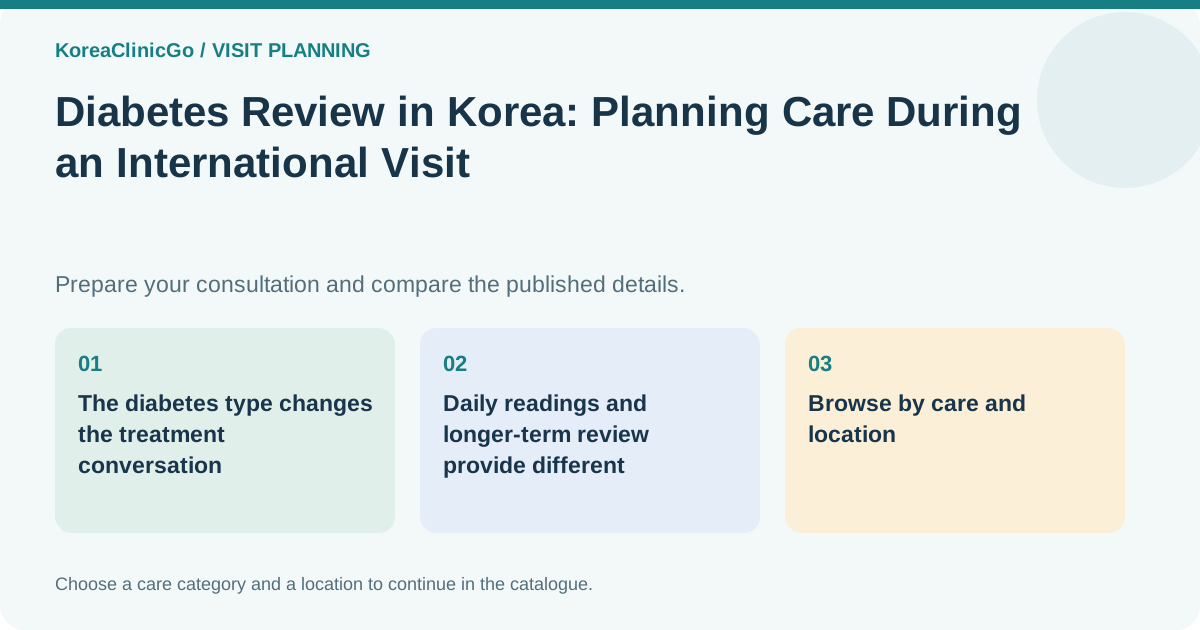
Diabetes Review in Korea: Planning Care During an International Visit
A diabetes appointment abroad should connect with your ongoing care rather than create an isolated set of results. Define whether you need a planned review, help with a practical treatment question or assessment of a new concern before arranging the visit.
In this guide
- The diabetes type changes the treatment conversation
- Daily readings and longer-term review provide different information
- Medicine and device choices are individualized
- Build a portable care summary
- Bring glucose data with context
- Budget for clinical review and ongoing supplies separately
- Plan medicines, devices and follow-up realistically
- A good handover prevents conflicting instructions
- Make the return-home handover specific
The diabetes type changes the treatment conversation

Diabetes is not one identical care pathway for every person. NIDDK distinguishes type 1 diabetes, which requires insulin, from type 2 diabetes, for which treatment may include lifestyle measures and different medicines, sometimes insulin. Other forms and pregnancy-related care have their own considerations.
A clinic cannot infer the complete plan from a glucose reading or a medicine brand alone. A review should start with the established type, existing care and purpose of the appointment. A newly abnormal screening result is also a different question from reviewing a diagnosis already managed for many years.
Daily readings and longer-term review provide different information
Glucose records show measurements at particular times, while an A1C result provides another view of blood glucose over a longer period. NIDDK describes diabetes management as also including issues such as blood pressure and cholesterol. These parts are connected, but that does not mean a visitor needs every test at every appointment.
The clinician should identify what is due, what was recently completed and what question a new test addresses. Differences in units and device reports need to be preserved. A sensor graph without its time period or context may be difficult to use for a reliable treatment discussion.
Medicine and device choices are individualized
NIDDK describes pills, injectable medicines and several insulin delivery methods as treatment options for different circumstances. Their functions are not identical, and one injection product should not be assumed to substitute for another. Food, activity, other health conditions and access to continuing care can affect the plan.
Device choice adds practical requirements such as supplies, instruction and compatibility. A visitor's treatment should therefore be reviewed as a whole rather than changed because a product is marketed as newer. Dosing and travel adjustments must come from the professional managing the individual plan, not from this guide or a booking message.
Build a portable care summary
Record your diagnosed diabetes type, the clinician or team usually managing it and recent reviews. Include all prescribed medicines with active ingredients and directions, allergies and relevant health conditions. Bring your existing plan for monitoring and for situations that need urgent help, if one has been provided. NIDDK emphasizes working with a healthcare team on an individual care plan. A visitor should not have to reconstruct that plan from several unlabeled photographs or an overseas brand name during a short consultation.
Bring glucose data with context
Ask which format the receiving clinic can use for meter or sensor records. Keep dates, units and notes attached to readings, including any events you already discussed with your usual clinician. Bring recent laboratory reports rather than only an overall number remembered from a call.
If a device is used, record its make, model and available reports. Do not change settings or medicine use to prepare for an appointment without clinical instructions. Explain if a device is unfamiliar in the receiving service so the team can plan how to review its information.
Browse Seoul clinics on KoreaClinicGo → · Browse Busan clinics on KoreaClinicGo →
Budget for clinical review and ongoing supplies separately
The consultation, laboratory tests, devices, consumables and any specialist assessments may involve different charges. A package price should make clear which results are interpreted and which services are only listed as optional. If a device or delivery system is proposed, the long-term availability of compatible supplies matters beyond the first purchase.
A prescription or equipment quote should identify the exact item and quantity rather than only a broad diabetes-care label. Existing-condition coverage and preauthorization need checking with the insurer. A cheaper initial visit can be poor practical value if the resulting plan cannot be continued at home.
Plan medicines, devices and follow-up realistically
Tell the clinician your travel dates and the practical issues you need reviewed, including whether you have enough prescribed supplies for the planned stay. Ask the professional managing your treatment for individualized advice about timing and travel; this article does not give dosing or time-zone adjustments. If a new prescription or device is discussed, confirm ingredient names, compatibility, instruction and follow-up arrangements. Obtain itemized charges and check your insurer's rules for an existing condition before assuming routine monitoring or replacement equipment is reimbursable.
A good handover prevents conflicting instructions
When a review confirms the existing plan, that confirmation should be documented as clearly as a change. If something is altered, keep the reason and the next review point with the written directions. Make sure the clinician at home can identify the ingredients, device and reports used for the decision.
Discuss planned travel and access to supplies before departure, especially when follow-up will happen elsewhere. A short international consultation can be useful for a defined question, but it should not create a parallel, poorly documented treatment plan that competes with ongoing care.
Make the return-home handover specific
Ask for copies of laboratory results, the assessment and any agreed changes, with the reasons written clearly. Establish who will review the plan next and which professional should respond to questions after departure. Keep your usual safety plan accessible and use medical care for acute concerns rather than a directory message. If additional screening was deferred, record what remains to be considered and by whom. Use the catalogue to explore relevant care categories and locations, while confirming the service and communication arrangements directly for your circumstances.
Continue planning
Sources and editorial scope
KoreaClinicGo editorial team · Updated 2026-10-19. General information and visit planning.
Read the sources
Medical references support general understanding. They do not provide an individual diagnosis or treatment plan, or confirm a Korean clinic’s services.
Continue exploring with KoreaClinicGo
Use KoreaClinicGo.com to explore general and specialist clinics in the region you plan to visit. Read the published services and branch details, then narrow your options at your own pace.
Browse general and specialist clinics →
This guide does not rank or recommend individual hospitals. Confirm current opening status and appointment availability with the exact branch before travelling.