VISITOR GUIDE · 2026-10-19
Cataract care in Korea: lens quotes, assessment and postoperative planning
Cataracts involve clouding of the eye's natural lens. The National Eye Institute explains that surgery replaces that cloudy lens with an artificial lens, but surgery may not be needed immediately. A cataract consultation in Korea should therefore begin with the examination and the effect on your activities. Lens brand comparisons and travel dates come after an individual discussion of whether surgery is appropriate and how follow-up would be organised.
In this guide
- Separate cataracts from other reasons for blurred vision
- Bring your everyday visual priorities
- Understand the operation and the lens choice separately
- Ask for the proposed lens decision in writing
- Separate lens material from the operation
- Agree a review schedule before booking surgery
- Distinguish a routine review from assessment of a new concern
- Keep the lens and operation records together
- What if the proposed lens changes after measurements?
- What happens on the procedure day?
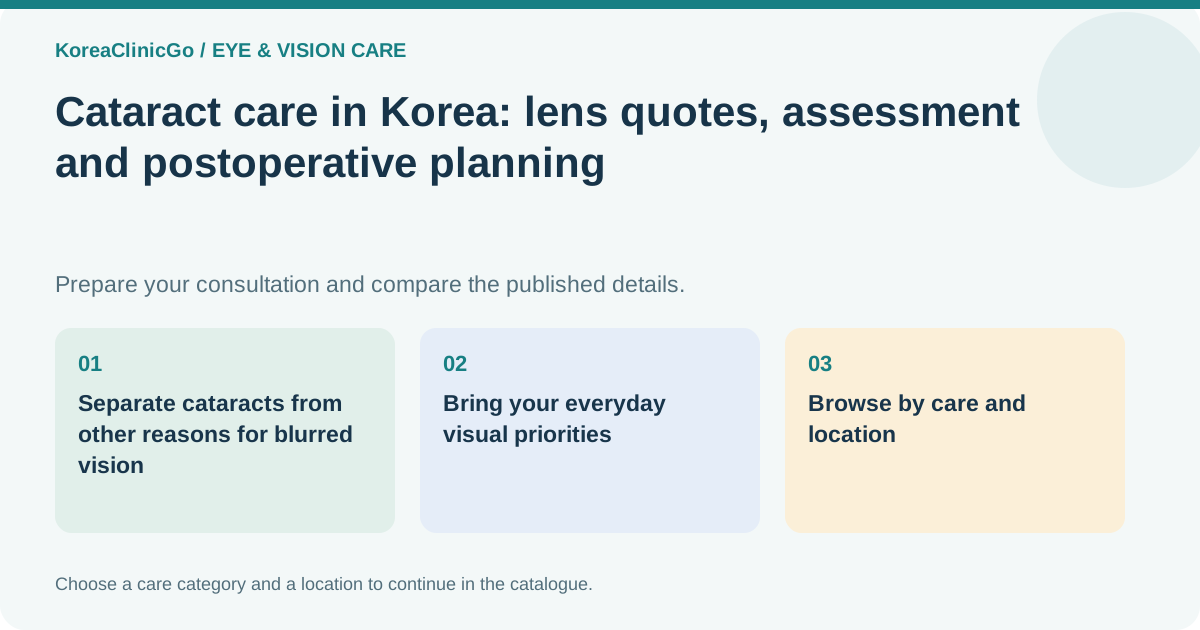
Separate cataracts from other reasons for blurred vision

A cataract affects the eye's natural lens, but blurred vision alone does not establish that it is the only relevant finding. NEI describes dilated examination as part of assessment and explains that the decision about surgery relates to the effect on daily life. Ask the ophthalmologist what the examination shows in each eye and whether another condition affects the expected benefit or the proposed sequence of care.
This discussion helps distinguish a cataract assessment from an elective lens-purchase consultation. If surgery is not recommended now, ask what monitoring or optical correction is proposed instead. If surgery is recommended, ask which symptoms it is intended to address and which may have another explanation. Do not interpret the presence of a lens catalogue as evidence that the most expensive implant is appropriate, or that changing the lens will answer every visual concern.
Bring your everyday visual priorities
Describe the activities you want the clinician to understand: reading, night driving, work at a particular distance or recognising faces. Bring current glasses, previous prescriptions and details of earlier eye surgery. Tell the clinic about medicines and other eye diagnoses. Ask whether it needs older images or operation reports in advance. A concise account of what has changed is more useful than asking for a particular lens model before the assessment establishes the relevant findings.
Understand the operation and the lens choice separately
NEI explains that cataract surgery removes the clouded lens and replaces it with an artificial intraocular lens. The operation and the choice of optical implant are related but distinct decisions. Ask what preparation and measurements are needed, what happens on the procedure day and which review appointments follow. Have the surgeon identify the planned eye clearly, especially if the two eyes have different findings or proposals.
For the lens discussion, describe the tasks that matter most and ask what compromises and remaining glasses needs are possible with the suitable options. Request the model and the reason for choosing it, not just a tier such as premium. Ask whether the quotation changes if the final measurements or clinical assessment lead to another model. A provisional discussion should remain conditional until the treating team has completed the information it needs for a final proposal.
Ask for the proposed lens decision in writing
If surgery is recommended, ask what lens options are suitable and how their limitations relate to your daily activities. Request the exact model and whether the plan includes an astigmatism-correcting version. Ask what glasses may still be needed and which questions cannot be answered until measurements are complete. Avoid interpreting terms such as premium or multifocal as a guarantee of a particular visual result or freedom from glasses in every situation.
Separate lens material from the operation
A published intraocular-lens amount may be a material fee rather than the complete surgical price. Ask for an estimate showing laterality, lens, surgeon or procedure charges, preoperative tests, medicines and postoperative reviews. Have the clinic identify the total for the exact proposed eye rather than combining unrelated table entries yourself. If both eyes are being considered, ask for a separate schedule and cost breakdown for each, including items charged once across the plan.
Agree a review schedule before booking surgery
Tell the clinician where you will stay, your departure date and who can accompany you if needed. Ask which postoperative examinations must occur in Korea and what would change the schedule. Request individual instructions about travel and activities rather than relying on another patient's timeline. If you plan ongoing care abroad, ask a receiving clinician whether they can take over the particular postoperative plan before committing to dates.
Browse Seoul clinics on KoreaClinicGo → · Browse Busan clinics on KoreaClinicGo →
Distinguish a routine review from assessment of a new concern
The postoperative plan should explain the scheduled examinations and how to obtain earlier advice. Ask what each review checks and whether another clinician can perform it if travel changes. An included visit is not the same as unlimited treatment for every later concern. Clarify both the clinical contact route and how additional examinations or procedures would be quoted if needed.
Before surgery, ask for written instructions that cover the actual medicines and activities in your plan. Do not borrow another patient's drop schedule or use general travel advice as permission to depart. If the second eye is also being considered, ask how the first eye's assessment or response could affect that decision and the timetable. Keep separate records for each operation so your home clinician can identify the lens and treatment associated with the correct eye.
Keep the lens and operation records together
Request the operation date, treated eye, lens model and power, relevant measurements and a clinical summary. Obtain the medicine instructions and a clear route for reporting unexpected symptoms. Ask how an additional examination, further procedure or changed lens plan would be charged. A good consultation leaves you able to explain the proposal and follow-up responsibilities to another clinician, even if you decide that your current visit is for assessment only.
What if the proposed lens changes after measurements?
Ask the surgeon to explain the revised choice, its intended role and any effect on the quotation or review plan. Request an updated written proposal before deciding. Keep the earlier estimate marked as provisional rather than assuming that its model, optical expectations or price still applies unchanged to a different implant.
What happens on the procedure day?
NEI describes numbing the eye, making an opening, removing the cloudy lens and placing the artificial lens. The team then checks the eye before departure from the service. This overview explains the purpose of the operation; the treating surgeon must supply your preparation, medicine, escort and recovery instructions. Ask how the proposed day is organised without interpreting a general description as a guaranteed duration or assurance of a painless experience.
Continue planning
Sources and editorial scope
KoreaClinicGo editorial team · Updated 2026-10-19. General information and visit planning.
Read the sources
Medical references support general understanding. They do not provide an individual diagnosis or treatment plan, or confirm a Korean clinic’s services.
Continue exploring with KoreaClinicGo
Use KoreaClinicGo.com to explore eye clinics in the region you plan to visit. Read the published services and branch details, then narrow your options at your own pace.
This guide does not rank or recommend individual hospitals. Confirm current opening status and appointment availability with the exact branch before travelling.