VISITOR GUIDE · 2026-10-19
Explaining allergies and previous reactions at a clinic in Korea
“I have an allergy” can mean different things unless the clinician knows what happened and what substance was involved. Bring the details you actually know, distinguish confirmed information from a suspicion, and ask how the history affects the appointment you are considering.
In this guide
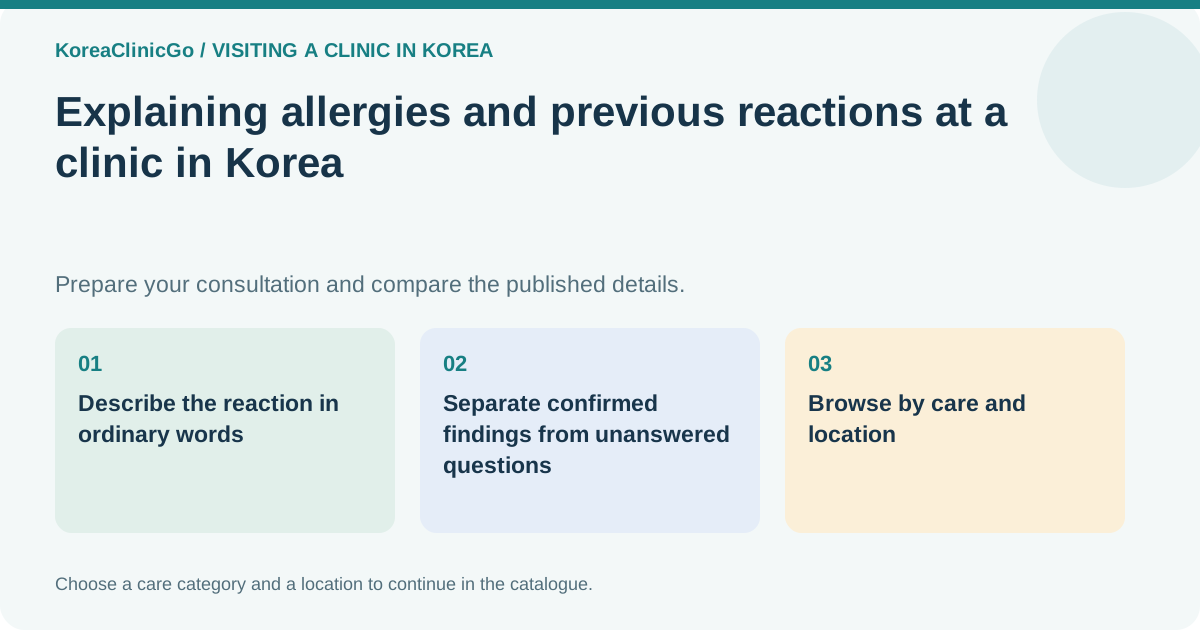
Describe the reaction in ordinary words

Write what happened, when it happened and what product, medicine or exposure was involved if known. Keep the sequence factual rather than supplying a diagnosis you have not been given. If the reaction was assessed by another professional, bring that report or the wording they used.
Separate confirmed findings from unanswered questions
Label an established diagnosis differently from a reaction whose cause remains uncertain. A family member’s allergy is also different from your own history. This distinction makes the consultation clearer and avoids turning a tentative explanation into a permanent label through translation.
Ask how the history affects the proposed service
For a procedure, test or prescription inquiry, ask the clinical team what information it needs to evaluate the history. Do not attempt a home test or alter a prescribed medicine based on this guide. The treating professional should explain the assessment and any preparation that applies to your situation.
Keep the explanation available after the visit
If the clinician documents a reaction or gives new instructions, ask how to obtain that record in a format you can use later. Keep it with the relevant product or medicine details. The catalogue can help you find the right starting category, but it does not confirm whether an allergy test or a particular treatment is suitable.
Browse Seoul clinics on KoreaClinicGo → · Browse Busan clinics on KoreaClinicGo →
Describe the reaction rather than relying on a label alone
Write what the exposure was, what happened, when it occurred and what treatment was needed. Separate a confirmed allergy from a suspected reaction or an unpleasant side effect. If a previous clinician identified a particular substance, bring that record. If you only remember a brand or a procedure, keep that detail without guessing which ingredient was responsible. This is especially useful when the planned visit involves medicines, adhesives or materials.
Record whether the reaction was immediate or delayed and whether the same exposure has occurred since. Photographs or discharge information from the episode may help the clinician understand the history. Do not intentionally repeat an exposure to test the story yourself. The aim is a clear account that the clinician can evaluate, not a self-made diagnosis of the reaction.
Make the history visible again when the plan changes
A booking note can be missed when the procedure, product or clinician changes. Repeat the relevant history during the clinical assessment and ask whether it affects the proposed plan. If the clinic suggests additional assessment, clarify whether that needs to happen before a procedure is booked. A reassurance from a booking desk is not the same as a clinical review of your history.
Include both the reaction history and current medication information when the treating team asks for it through a verified route. Do not assume that “natural”, “hypoallergenic” or a familiar brand guarantees suitability. When browsing the catalogue, use service descriptions to identify a relevant consultation; you do not need to choose a treatment product before the allergy discussion has happened.
Continue planning
Sources and editorial scope
KoreaClinicGo editorial team · Updated 2026-10-19. General information and visit planning.
Read the sources
Medical references support general understanding. They do not provide an individual diagnosis or treatment plan, or confirm a Korean clinic’s services.
Continue exploring with KoreaClinicGo
Use KoreaClinicGo.com to explore care categories in the region you plan to visit. Read the published services and branch details, then narrow your options at your own pace.
This guide does not rank or recommend individual hospitals. Confirm current opening status and appointment availability with the exact branch before travelling.